
The Liver 'Reset': Nutrition & Lifestyle Tips
- Aug 31, 2025
- 6 min read

Nutrition and Lifestyle Strategies for Managing Metabolic Dysfunction-Associated Steatotic Liver Disease
For this month, our newsletter is focusing on metabolic dysfunction-associated steatotic liver disease (MASLD), often called “fatty liver”. It’s all about integrating small steps, to achieve big wins for liver health! As a clinical dietitian, I often see clients with MASLD, and the good news is that lifestyle changes can not only prevent progression but can also reverse fatty liver. I wanted to pull together the top evidence-based strategies we discuss with patients to help improve liver health, metabolic markers, and long-term outcomes. In this month’s newsletter, I’m covering nutrition, body composition, movement, supplements, and daily habits; all designed to help reverse fatty liver and support lifelong health.
Prevalence Check? Did you know fatty liver now affects nearly 1 in 4 adults worldwide? It’s often silent, showing up on bloodwork or imaging before symptoms appear. That’s why nutrition and lifestyle play such a big role in catching it early and turning things around.
Quick Self-Check Quiz: Are You at Risk?
Answer these yes/no questions:
Is your waist circumference above:
Women: ≥80 cm
Men: ≥94 cm
Do you have visceral fat (belly fat around the organs)? If you’ve had a DEXA or BODPOD scan, a visceral fat rating >12 suggests increased risk.
Has your A1C ever been above 5.5% (early marker of insulin resistance)?
Are your triglycerides above 1.7 mmol/L (a key component of metabolic syndrome)?
Do you spend most of your day sitting with little movement breaks?
If you answered “yes” to 2 or more, it may be time to take action to protect your liver and long-term metabolic health.
Understanding MASLD
Metabolic Dysfunction-Associated Steatotic Liver Disease (MASLD), formerly NAFLD, is characterized by excess fat accumulation in the liver in the absence of significant alcohol intake. It is strongly associated with obesity, type 2 diabetes, insulin resistance, and metabolic syndrome. MASLD affects approximately 25% of adults globally and can progress to inflammation, fibrosis, and cirrhosis if left unmanaged.Evidence shows that dietary and lifestyle interventions can reduce liver fat, improve liver enzymes, and support long-term metabolic health (Alberta Health Services, 2022).
Evidence-Based Lifestyle Strategies for MASLD, below:
#1 Weight Loss & Body Composition
Why it matters:
5% weight loss → reduces liver fat.
7–10% weight loss → improves inflammation and ballooning.
≥10% weight loss → may regress fibrosis (AASLD, 2023).
Focus on fat loss, not just weight loss:
Visceral fat is the most harmful type of fat for liver health.
Preserving or building muscle mass improves insulin sensitivity and metabolic outcomes.
How to do it:
Aim for a 500–750 kcal/day deficit = ~0.5–1 kg/week weight loss.
Combine diet, resistance training, and adequate protein to support lean mass retention.
PRO TIP: Consumer body-composition scales (e.g., Tanita) often use a visceral fat rating from 1 to 59. A reading above 12 indicates excess visceral fat, a strong driver of liver fat, insulin resistance, and inflammation. Healthy levels are:
Men: 1–12
Women: 1–9
#2 Now for my favourite part, let’s dive into food-specific changes:
Low Glycemic Index (GI) diets are associated with improved insulin sensitivity and lower liver enzyme levels (Esposito et al., 2009). Low-GI foods help reduce post-prandial blood glucose and insulin surges, which drive fat accumulation in the liver.
Food Group | Low GI (≤ 55) Choose Most Often | Medium GI (56–69) Choose Less Often | High GI (≥ 70) Choose Least Often |
Grains and Starches | Sourdough, All-Bran Buds, Barley, Bulgur, Sweet Potato, Popcorn | Pumpernickel, Rye, Large Flake Oats, Couscous, Basmati Rice, Brown Rice | All-Bran Flakes, Jasmine Rice, Millet, Pretzels, Rice Cakes, Soda Crackers |
Fruits | Apple, Orange, Pear, Berries, Cantaloupe, Honeydew, Plum, Mango | Cherries, Figs, Kiwi, Grapes, Pineapple | Banana (Over-Ripe), Watermelon |
Dairy and Alternatives | Unsweetened Cow’s Milk, Almond Milk, and Yogurt | Rice Milk | |
Meat Alternatives | Chickpeas, Lentils, Soybeans / Edamame, Split Peas, Kidney Beans |
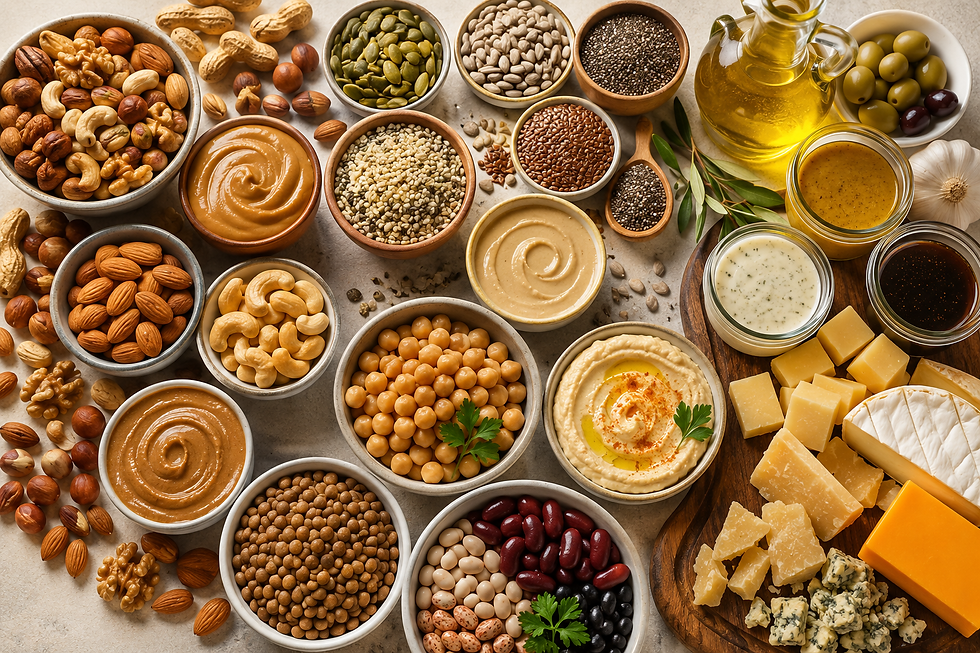
Mediterranean Dietary Pattern, emphasizes fruits, vegetables, legumes, nuts & seeds, whole grains (with low GI preference), healthy fats, and moderate fish intake. Clinical trials have demonstrated that adherence can reduce liver fat, optimize liver enzymes, improve insulin sensitivity, and reduce inflammatory markers (Ryan et al., 2013).
Food Group | Servings | GI Guidance / Notes |
Vegetables & Fruits | ≥5 servings/day | Prioritize low-GI fruits (berries, apples, pears) and non-starchy vegetables |
Grains & Starchy Vegetables | 3–6 servings/day | Low-GI whole grains (quinoa, barley, steel-cut oats) and starchy vegetables (sweet potato, lentils, peas), ≥4 g fibre, ≤8 g sugar per serving |
Legumes & Nuts | 2–4 servings/week | Low-GI, fibre-rich, protein-rich |
Olive Oil | 2–4 tablespoons/day | Primary fat source, monounsaturated fat |
Fish / Seafood | ≥2 servings/week | Prefer fatty fish (salmon, sardines, mackerel) |
Poultry / Eggs | 2–3 servings/week | Lean protein versions |
Dairy | 1–2 servings/day | Low-fat, fermented dairy preferred |
Red Meat | ≤1–2 servings/month | Minimize saturated fat |
Multiple RCTs and meta-analyses demonstrate the Mediterranean Dietary Pattern reduces hepatic steatosis independent of weight loss, lowers liver enzymes ALT/AST, and improves glycemic control (Toshimitsu et al., 2007). Rationale:
Boosting unsaturated fat intake (olive oil, omega-3s) that supports healthy lipid metabolism
Maximizing antioxidant and anti-inflammatory foods: fruits, vegetables, legumes, whole grains
Enhancing insulin sensitivity through dietary fibre and low-GI patterns
Suppressing inflammation; a key driver in MASLD progression
Building a Balanced Plate (as per Canada’s Food Guide) for portion guidance:
✨ Half the plate: Non-starchy vegetables + fruits (prioritize low-GI, fibre-rich options).
✨ One-quarter: Lean proteins (plant and animal-based)
✨ One-quarter: Low-GI starchy foods with >4 g fibre and <8 g sugar per serving
✨ Healthy fats: Olive oil, avocado, nuts, seeds; incorporated in moderation
Meal Timing and Eating Patterns is essential, here’s why:
✨ Time-restricted eating (8–10 hr eating window) can reduce liver fat even without weight loss; start eating earlier in the day, with meals or snacks every 2–3 hours
✨ Avoid late-night eating, which worsens circadian misalignment, impairs insulin sensitivity and promotes hepatic fat accumulation; aim to finish eating at least 2–3 hours before bedtime
✨ Consistent meal timing supports stable blood sugars and and supports metabolic regulation, which is especially important for MASLD reversal
Quick LIST of other high priority areas of nutrition:
Prioritize Healthy Fats
Include extra virgin olive oil, avocado, nuts, seeds, and fatty fish.
Limit saturated fats (<7–10% of daily calories; ~10–15 g/day).
Increase plant-based proteins and lean animal proteins
Beans, lentils, tofu, tempeh, skinless poultry, fish.
Protein supports lean mass preservation during weight loss, which improves metabolic outcomes.
Limit added sugars
Target <5% daily value of total sugars or <8 g per serving.
Reduce sugar-sweetened beverages, desserts, and processed snacks.
Increase fibre intake (a dietitian favourite “F-word”)
Target ≥25–30 g/day fibre (legumes, fruits, vegetables, whole grains, nuts).
Aim for >4 g fibre per serving or >15% daily value per food item.
Sources: legumes, whole grains, vegetables, fruits, nuts, seeds.
Sodium management
<5% daily value per serving, or <2,300 mg/day total.
Alcohol
Any alcohol may worsen MASLD → best to abstain or minimize, especially if fibrosis is present.
Coffee
2-3 cups/day (caffeinated or decaf) is linked with reduced fibrosis risk. Yes, you heard me!
Using the Nutrition Facts Table to make ‘liver-friendly’ food choices:
✨ Compare labels to choose products with lower sugar, higher fibre, lower saturated fat, lower sodium and higher protein
✨ Use the % Daily Value column to quickly identify nutrient-rich options
✨ Prioritize minimally processed foods for best outcomes; look at ingredients lists: watch for added sugars (maltodextrin, syrup), hydrogenated oils (trans fats), and choose items that are whole-food centric
Nutrient | Target |
Saturated Fat | ≤5% DV or 10–15 g/day |
Sodium | ≤5% DV or <2,300 mg/day |
Total Sugars | ≤5% DV or <8 g per serving |
Fibre | ≥4 g per serving or >15% DV |
Protein | ≥5 g per serving |
Nutrition Supplements: Evidence-Based Guidance & Dosing
Supplement | Form & Dose | Notes & Caution |
Vitamin E | Alpha-tocopherol at 800 IU/day | Adults in the absence of diabetes with NASH see histologic improvement; increased risk of stroke and prostate cancer; use selectively. |
Omega-3 FAs | EPA/DHA totaling 1–4 g/day | Reduces triglycerides and liver fat; choose fish-oil with clear EPA/DHA content. |
Probiotics | Strain-specific, evidence emerging | May reduce liver enzymes; not standard therapy yet. |
Vitamin D | Maintain sufficient serum levels | Support metabolic health; test to guide dosing. |
NOTE: Avoid unregulated herbal blends, risk of hepatotoxicity.
#3 Physical Activity (last but not least!)
Aerobic exercise: 150-300 min/week of increased heart rate movement, such as brisk walking, cycling, swimming
Resistance training: 2-3x/week to build/maintain muscle mass; key for reducing insulin resistance
Movement breaks: Avoid prolonged sitting; even 2-3 min of walking every 30–60 min helps reduce risk
PRO TIP: Benefits occur even without weight loss, just by being more active!
Closing Thoughts & Key Takeaways
MASLD is one of the most common liver conditions today, but the encouraging news is that it’s often reversible. The key is not perfection, but small, consistent steps that add up over time.
Key Takeaways
MASLD is common but reversible with lifestyle changes
Aim for 7–10% weight loss, reduce visceral fat, and preserve lean muscle
Choose a Mediterranean-style, low-GI, balanced plate for meals
Time meals earlier in the day and avoid late-night eating
Practice regular resistance and aerobic activity to support liver and metabolic health
Use smart label-reading strategies and, if appropriate, consider evidence-based supplements (like vitamin E or omega-3s) under professional guidance
Prioritize all types of movement and active living as a part of your health journey
When these strategies are combined, they not only support liver health but also improve overall metabolic resilience and long-term wellbeing. Start with just one change today, whether it’s adding a brisk walk, building a balanced plate, or moving dinner a little earlier. Over weeks and months, these choices create lasting impact.
✨ If you found this helpful, please share it with a friend or colleague who could benefit. And don’t forget to subscribe to our monthly newsletter for more evidence-based nutrition and lifestyle strategies to support your health!
xoxo, Alissa Steinberg RD CDE MHSc


Comments